Read what the video says (the full script)
## Settling in
Hello, and welcome. Let the room grow quiet around you now. The lights are low, the day is done, and there is nowhere else you need to be.
Let your head sink softly into the pillow, and let your shoulders loosen, a little at a time. Your hands can rest wherever they feel comfortable. Your feet can be still.
In a little while, you will hear one hundred calm and true facts about the universe. We will begin close to home, with our own warm Sun, and then drift slowly outward, to the clouds where stars are born, to the soft glow of old stars, to the great spiral galaxies, and at last, to the oldest light there is.
There is nothing to remember, and nothing to follow. You do not need to keep track of the numbers or the names. If a fact slips past you, let it go. If your thoughts wander somewhere else, that is perfectly all right. You can drift away whenever you like, and the words will simply carry on, softly, in the background.
Before we begin, let us take one slow breath together. Breathe in gently, and feel your chest rise. And slowly breathe out, letting everything go.
Once more. Breathe in, slow and deep. And breathe out, long and easy, a little more relaxed than before.
Good. Now let your breathing find its own quiet rhythm, without any effort at all.
The journey will drift gently from one idea to the next, like a small boat carried along a calm, dark river under the stars. You do not need to steer. You only need to rest.
And if you fall asleep somewhere along the way, long before the end, that is exactly what this is for.
## Breathing
Let's begin with a few slow breaths together.
## Universe facts 1 to 25
Let us begin, close to home, with the star that warms every one of our mornings.
The Sun is the only star in our solar system. It sits at the very centre, and its gravity holds the whole family together. The planets, the asteroids, the comets and even the tiniest bits of dust all travel around it, each one keeping to its own long and patient path.
Picture the Sun in the middle of a great, dark space, glowing steadily. Around it, far out, small worlds drift in wide circles. Some are rocky and some are made of gas, and each one moves in a slow and quiet orbit.
One star, and everything else turning softly around it. That is where our journey begins tonight, close to home, with the star we know best of all. So let yourself settle in, and let the warm, steady light of the Sun be the first soft thing we think about, as the night grows quiet around you.
Astronomers call the Sun a yellow dwarf star. It is a hot, glowing ball made mostly of hydrogen and helium, the two lightest elements of all. It is about one hundred and fifty million kilometres away from the Earth, and without its energy, life as we know it could not exist here.
Imagine a warm, golden sphere, shining in the dark. It is made almost entirely of the two simplest kinds of matter, gathered together into one enormous, glowing ball, giving its light and warmth out in every direction.
A yellow dwarf, made of hydrogen and helium. Such a small name for something so bright and so generous, a star that warms every morning of our lives. Let that gentle warmth stay with you for a moment, like sunlight resting on a blanket in the late afternoon, soft and golden and kind.
The Sun formed about four point six billion years ago, inside a giant, spinning cloud of gas and dust called the solar nebula. As the cloud drew inward under its own gravity, it turned faster and flattened into a disk. Most of the material gathered at the centre, and that centre became our Sun.
Picture a vast, soft cloud, turning very slowly in the dark. Little by little it spins a bit faster and flattens out, like a lump of soft dough spun into a round, flat shape, with a warm glow slowly gathering in the very middle.
From a quiet, turning cloud came a star. And from the leftover dust and gas, in time, came the planets, and the Earth, and everything we know. Everything around you, the room, the bed, the pillow beneath your head, began long ago as part of that same slow and turning cloud.
The Sun holds about ninety-nine point eight percent of all the mass in our solar system. All of the planets, all of the moons, the asteroids and the comets together make up only the tiny amount that is left over. Nearly everything in our solar system is the Sun.
Imagine placing the Sun on one side of a great set of scales, and every planet and moon on the other side. The scales would barely move. The planets would be like a few small pebbles beside a mountain.
Ninety-nine point eight percent. The Sun is almost the whole of our solar system, and all the rest of us are the small and gentle remainder, travelling around it. There is something peaceful in that thought, of so many small worlds resting in the care of one great, steady light at the centre.
The Sun is about one hundred times wider than the Earth. It is also about ten times wider than Jupiter, the biggest planet in our solar system. Its diameter is about one point four million kilometres, which makes it the largest object anywhere in our solar system.
Picture a line of Earths, laid side by side like small blue marbles, stretching straight across the face of the Sun. You would need about one hundred of them to reach from one edge of the Sun to the other.
One hundred Earths, in a long and patient row. It is a lovely, simple way to feel the size of our star, without needing to hold any large numbers at all. Let the row of little blue marbles fade softly away now, one by one, until only the warm, golden glow of the Sun remains.
It would take about one point three million Earths to fill up the volume of the Sun. And to match the Sun's mass, you would need more than three hundred and thirty thousand Earths. Our home planet, so large to us, is very small beside its star.
Imagine a great hollow sphere, as large as the Sun, being slowly filled with tiny Earths, one after another, like marbles poured gently into an enormous glass jar, until more than a million of them rest inside.
More than a million Earths could fit inside. Let that number float past you softly, like a cloud. There is nothing you need to do with it, only let it drift by. The Sun is very large, and we are very small, and that is perfectly all right. We are warm, and we are held.
Even though the Sun is so important to us, it is only an average star in terms of its size. Astronomers have found stars up to one hundred times larger than the Sun. And many solar systems, out among the stars, have more than one sun of their own.
Picture our Sun beside a far larger star, glowing like a great lantern. Our Sun would look like a small, steady candle beside it. And somewhere, far away, there are skies where two or three suns rise each day.
An ordinary star, in a sky full of stars. There is something comforting in that. Our Sun is not alone, and not unusual, but simply one warm light among very many. And yet, to us, it is the most important star of all, the one that brings every morning, every season, and every gentle summer evening.
The hottest part of the Sun is its core, where the temperature reaches about fifteen million degrees Celsius. In that heat, hydrogen is joined together to make helium, a process called nuclear fusion. This is what powers the Sun's heat and light, and it pushes outward to hold the star up.
Imagine the very centre of the Sun, deep beneath all its glowing layers. There, tiny particles meet and join together, again and again, and every joining gives out a little warmth that slowly travels outward toward the light.
Deep in the core, small pieces of matter join, and out comes sunlight. All that warmth begins in one quiet, hidden place, at the very heart of the star. Far away, that quiet heart keeps working, steadily and patiently, through every night, while the Earth turns softly and the world sleeps.
The core of the Sun is very dense. It packs about one hundred and fifty grams into every cubic centimetre, which is about eight times the density of gold. The core is also about one hundred and thirty-eight thousand kilometres thick, wider than many planets.
Picture a single small sugar cube. Now imagine that same little cube holding as much weight as eight cubes of solid gold. That is how tightly the matter is packed together, deep in the centre of the Sun.
Denser than gold, and far hotter than anything on Earth. And yet, from where we are, the Sun only gives us its soft, steady warmth upon our skin. Let the comparison drift away now, the gold and the sugar cube, and keep only the gentle feeling of warmth that reaches us from so far.
The energy made in the Sun's core does not leave quickly. It bounces around, slowly working its way outward, and it takes about one hundred and seventy thousand years to travel from the core to the top of the Sun's convection zone, the layer of rising and sinking plasma near the surface.
Imagine a small spark of warmth, wandering gently outward, bumping softly this way and that, for thousands upon thousands of years, slowly rising through the Sun, before it reaches the surface and finally sets out into space.
Some of the warmth reaching the Earth began its slow journey long before any of the stories we remember. It has been travelling patiently, all that time, to arrive here. There is no hurry in the Sun at all. Everything inside it moves slowly, gently, taking all the time it needs to find its way.
The Sun does not have a solid surface. The part we see is called the photosphere, which means light sphere. This is the layer that gives out most of the Sun's visible light. Its temperature is about five thousand five hundred degrees Celsius, much cooler than the core.
Picture the glowing face of the Sun, soft and golden, with no ground to stand on, only bright, shining gas. It is a sphere made of light itself, gently glowing in every direction at once.
The light sphere. It is a beautiful name, and a true one. It is the part of the Sun that sends us almost all of its light. Picture that soft golden glow once more, and then let it dim gently in your mind, like a lamp being turned down slowly for the night.
In one of the Sun's great mysteries, its outer atmosphere, the corona, is much hotter than the surface below it. The corona can reach about two million degrees Celsius. It is a bit like walking away from a campfire, and feeling warmer the further you go. Scientists are still working out why.
Imagine a thin, pale veil of light, floating far above the glowing face of the Sun, stretching softly out into space, and somehow warmer than the bright surface that lies beneath it.
A crown that is warmer than the fire below. Some of the Sun's secrets are still waiting quietly to be understood, and that is perfectly all right. Not every question needs an answer tonight. Some can simply rest, unanswered, like the soft corona drifting quietly around the Sun.
During a total solar eclipse, when the Moon covers the bright face of the Sun, the hidden layers come into view. The chromosphere looks like a fine red rim around the Sun. The corona forms a beautiful white crown, with long streamers that look like the petals of a flower.
Picture the sky darkening gently in the middle of the day. Where the Sun was, there is a black circle, edged in red, with soft white petals of light stretching out around it into the deep blue.
The word corona means crown. For a few quiet moments during an eclipse, the Sun wears it for all to see, before the light slowly returns. Let the image of that soft white crown linger for a moment, glowing gently in your mind, and then let it slowly fade.
The Sun turns, just as the Earth does, but because it is made of plasma and not solid rock, different parts turn at different speeds. At its equator, the Sun turns once in about twenty-five days. Near its poles, one turn takes about thirty-six days.
Imagine a great glowing ball, turning slowly in the dark, with its middle moving a little faster than its top and bottom, like the gentle swirl of honey being stirred in a jar.
Twenty-five days at the middle, and thirty-six days at the poles. The Sun turns softly and unevenly, in its own unhurried way. Like the Sun, you can move slowly now, at your own pace. There is nowhere you need to be, and nothing you need to do.
The Sun goes through a long cycle of quiet times and busier times. About every eleven years, its magnetic north and south poles swap places. Over each cycle, the Sun's surface and atmosphere change from calm, to active, and back to calm again.
Picture a slow tide rising and falling, over many years. The Sun grows busier, with more dark spots and bright flares, and then gradually settles again into a long and peaceful quiet.
Eleven years, out and back, like a very slow breath. Even our steady star has its own long, gentle rhythm, rising and resting over and over. Let your own breath find its rhythm too, slow and easy, in and out, rising and resting, just as gently as the Sun.
Material flowing away from the Sun forms the solar wind, which blows out in every direction. It forms a huge bubble around the Sun called the heliosphere, which reaches far beyond the orbits of the planets. This means the Earth is actually inside the Sun's atmosphere.
Imagine a vast, invisible bubble, gently blown out from the Sun, stretching past every planet, enclosing the whole solar system in its soft and quiet embrace.
We live inside the outer reaches of our star. Every night, as you sleep, the Earth travels on, wrapped gently within the Sun's wide, invisible bubble. It is a lovely thought to rest with, that even here, in the dark of night, we are still held gently within the reach of our star.
Light travels at a tremendous speed, but even so, it still takes time to cross space. Light from the Sun needs about eight minutes and twenty seconds to reach the Earth. So when we see the Sun, we are seeing it as it was a little more than eight minutes earlier.
Picture sunlight leaving the Sun and travelling across the dark, quiet space between the planets, arriving on the Earth just a few minutes later, landing softly on leaves, and water, and the windowsill.
Every time we look up at the sky, we are seeing a little way into the past. The further away something is, the further back in time we are seeing it. Light from further away has travelled for much longer, and as we drift outward tonight, we will be looking further and further back in time.
Distances between the stars are so large that astronomers measure them in light-years. A light-year is how far light travels in one year. That is about nine and a half trillion kilometres, a distance far greater than anything we could ever walk or sail.
Imagine a single beam of light setting out across the dark, and travelling without stopping, all through the seasons, through spring and summer and autumn and winter, for one whole year. Wherever it reaches is one light-year away.
A light-year is not a measure of time, but of distance. It is a gentle way to talk about spaces far too wide for any ordinary number. Let the idea of all that distance soften, and become simply a feeling of wide, open, peaceful space, stretching quietly in every direction.
No spacecraft has gone farther than NASA's Voyager one. It was launched in nineteen seventy-seven to fly past Jupiter and Saturn. In August of twenty twelve, it became the first spacecraft to leave the Sun's great bubble and begin measuring the space between the stars.
Picture a small spacecraft, with a large dish facing home, travelling quietly onward through the dark, year after year, further from the Sun than anything else people have ever made.
Voyager one is still out there, moving on through the quiet between the stars, carrying a little piece of human curiosity with it. It keeps on going, slowly and steadily, through the dark, the way a quiet thought drifts on and on as we fall asleep.
Each Voyager spacecraft carries a golden record, a gold-plated copper disc about thirty centimetres across. It holds greetings in fifty-five languages, sounds from life on Earth such as whale songs and laughter, ninety minutes of music, and one hundred and fifteen pictures of life on our planet.
Imagine that golden disc, travelling quietly through the dark, with whale songs and laughter and music sleeping inside it, a small and gentle message from the Earth, carried far out among the stars.
Greetings, music and laughter, drifting through space. It is one of the kindest things people have ever sent so far away. Somewhere very far away, those songs and voices are still travelling, quietly, and they will go on travelling for a very long time.
Voyager one's last images were a mosaic of sixty-four pictures, taken from about forty times the distance between the Earth and the Sun. Together they made a portrait of our solar system's family, showing six of the planets. The image of the Earth inspired the famous words, the Pale Blue Dot.
Picture the Earth from very far away, as just a tiny, pale blue point of light, floating in a soft beam of sunlight, with all the oceans and mountains and cities held within that one small speck.
One pale blue dot, holding everyone we have ever known. Let that small, quiet picture rest with you for a moment. Everyone you love is on that small blue dot, resting under the same sky, in the same soft light, on the same quiet night.
The Sun's nearest stellar neighbour is the Alpha Centauri system, which has three stars. The closest of these is a small red dwarf called Proxima Centauri, about four point two four light-years away. The two other stars are a pair of sunlike stars that orbit each other, a little further away.
Imagine three stars, travelling together through the dark. Two of them circle each other, like dancers turning slowly, and the third, small and red, keeps its distance, but stays close enough to be part of the family.
Our nearest neighbours in the sky. Even the closest stars are more than four light-years away, a small family of lights across a very wide and quiet space. Let your mind wander gently out toward them, past the planets and past the Sun's wide bubble, into the soft, deep quiet between the stars.
The closest known planet outside our solar system circles Proxima Centauri. It is called Proxima b, and it is probably a rocky world. It lies about four light-years away, which is more than forty trillion kilometres. Planets beyond our solar system are called exoplanets.
Picture a small rocky world, circling a little red star, lit by a soft and reddish light, far away across the dark, where no one has ever been and everything is quiet.
Our nearest known planetary neighbour beyond the Sun. It is very far away, and yet, on the great map of the sky, it is just next door. Perhaps, on that small world, it is morning, or perhaps it is night. Either way, it is turning quietly, just as the Earth is turning now.
Thanks to NASA's Kepler Space Telescope, we know there are more planets than stars in our galaxy. The Milky Way contains at least one hundred billion stars, and if many of those stars have whole families of planets, the number of planets is already heading into the trillions.
Imagine every star you have ever seen in the night sky, and then imagine each one with small worlds circling quietly around it, some rocky, some icy, some wrapped in clouds.
More planets than stars. The night sky is fuller than it looks, with countless quiet worlds turning softly in the dark. Let your thoughts drift among them for a while, from one quiet world to the next, with nothing to look for and nothing to find.
Most exoplanets have been found by watching for a tiny shadow. When a planet passes between its star and us, it blocks a little of the star's light, and for a short time the star looks very slightly dimmer. This gentle dip in light is called a transit.
Picture a faraway star, shining steadily, and then, for a little while, just a whisper dimmer, as a small world passes across its face, before the light returns, just as it was.
A star dims softly, and a planet is found. It is one of the quietest ways anyone has ever made a discovery. And now, let us drift a little further out, away from our own Sun, to the great quiet clouds where every star begins.
## Universe facts 26 to 50
Let the Sun grow small behind us now, as we drift out into the deep, quiet spaces between the stars.
Astronomers estimate that the universe could contain up to one septillion stars. That is a one followed by twenty-four zeros. Our own galaxy, the Milky Way, holds more than one hundred billion of them on its own, and our Sun is just one quiet member of that enormous crowd.
Imagine walking along a long, wide beach at night, with soft sand beneath your feet. Now picture every grain of that sand as a star, and then a great many beaches more, stretching on and on, further than you could ever walk.
One septillion. It is a number far too large to hold, and you do not need to hold it. Simply let it drift past, like a slow wave, and let the stars stay wherever they are, shining quietly in the dark. Each of those stars is shining somewhere right now, and none of them asks anything of you at all.
Every star is a giant ball of hot gas, made mostly of hydrogen, with some helium and small amounts of other elements. And every star has its own life story. Some stars shine for a few million years, while others will keep shining for trillions of years, slowly changing as they grow older.
Picture the sky as a great garden of lights, each one at a different time in its life. Some are young and bright, some are steady and settled, and some are old and soft and glowing gently, all of them shining at once in the dark.
Every star has its own long story, and each one is told very slowly. Tonight we will follow those stories gently, from the clouds where stars begin, to the soft glow they leave behind at the very end. There is no need to keep track of any of it. Simply let one story lead softly into the next.
Stars form inside huge clouds of gas and dust called molecular clouds. These clouds can hold anywhere from one thousand to ten million times the mass of the Sun, and they can stretch for hundreds of light-years. They are very cold, and that coldness helps the gas gather into clumps.
Imagine a vast, dark cloud, drifting slowly between the stars, so large that light itself would need hundreds of years to cross from one side to the other. Inside it, everything is still and cold and quiet, waiting.
These cold, quiet clouds are where every star begins. Long before there is any light, there is only a soft darkness, gathering itself together very slowly over a very long time. Let yourself feel that same stillness now, cool and dark and calm, like a quiet night with nothing left to do.
Inside a molecular cloud, some clumps of gas gather more and more matter, and their gravity grows stronger. In time, gravity draws a clump inward, and the material warms up. Over hundreds of thousands of years, the clump gains mass, begins to spin, and grows hotter, until it becomes a protostar, a baby star.
Picture a small, warm glow appearing deep inside a dark cloud, like a candle being lit behind a thick curtain, faint at first, and then slowly, slowly growing brighter as the seasons of the universe pass.
A baby star, wrapped in its cloud. Every bright star in the sky began this way, as a small and gentle warmth, deep in the quiet dark, growing a little brighter all the time. Rest here for a moment with that small and growing light, warm and safe inside its soft and quiet cloud.
Groups of young stars that have formed together from a molecular cloud are often called star clusters, and clouds full of them are called stellar nurseries. The James Webb Space Telescope photographed the edge of one nursery in the Carina Nebula, where the clouds look like mountains and valleys.
Imagine a landscape of glowing clouds that looks just like a mountain range at dusk, with soft peaks and deep valleys, all shining in gold and amber, and tiny new stars sparkling here and there along the ridges.
Mountains made of starlight and dust. A stellar nursery is a place of quiet beginnings, where new stars rest in soft clouds until they are ready to shine on their own. Let your eyes rest gently on those soft mountains, and let your thoughts slow down to match their quiet stillness.
The Orion Nebula is the closest large star-forming region to the Earth. It is about one thousand five hundred light-years away, and it is bright enough to see with the unaided eye from a dark place. It sits just below the three stars of Orion's belt.
Picture the constellation of Orion on a clear, dark night, with its three bright stars in a row. Just below them, there is a small, soft smudge of light. That faint glow is a great cloud where stars are being born.
You may have looked at it already, without knowing. A small, misty patch below three stars, where the universe is quietly making new suns, one by one, far away in the dark. Perhaps, on some clear night, you will see that soft glow again, and remember that new stars are quietly forming there.
The Orion Nebula has been known to many different cultures throughout human history. The Maya of Mesoamerica thought of it as the cosmic fire of creation. It is a fitting name, because the nebula is an enormous cloud of dust and gas where vast numbers of new stars are being formed.
Imagine people long ago, standing under the same night sky, looking up at that same faint glow, and seeing in it a fire where new things are made, a warm and gentle hearth among the stars.
A fire of creation. Across many centuries and many cultures, people have looked at the same small light and found wonder in it, just as we can now. Let that gentle hearth glow in your mind for a little while, warm and steady and far away.
At the bright heart of the Orion Nebula are four massive young stars, arranged in a shape called a trapezium. All of them were born together in this busy place of star formation. Their strong ultraviolet light is slowly carving out a hollow space inside the nebula.
Picture four bright stars, shining close together in the middle of a glowing cloud, like four lanterns hung in a cave, their light gently pushing the soft walls of gas further and further back.
Four sibling stars, born together, lighting up their home. Their glow shapes the whole nebula around them, slowly and patiently, over a very long time. Let your own thoughts settle softly too, like dust slowly drifting to the floor of a quiet room.
Hubble has seen dark disks of dust around newborn stars in the Orion Nebula. One of them, seen exactly edge-on, looks like a little flying disc in space. The disk may be a planetary system in the making, and our own solar system probably formed from a disk very much like it.
Imagine a thin, dark disk of dust, turning slowly around a young star that is hidden behind it, with small grains of dust gathering together over time into pebbles, and rocks, and perhaps one day into worlds.
A planetary system, just beginning. Long ago, our own Earth was only dust in a disk like this one, turning gently around a young Sun. It is a gentle thing to think of, that every world, including ours, began as soft dust turning slowly in the dark.
The Pillars of Creation are tall columns of gas and dust inside the Eagle Nebula, about six thousand five hundred light-years away. The Hubble Space Telescope made them famous with its first picture of them in nineteen ninety-five, and the Webb telescope has since photographed them again in infrared light.
Picture great towers of soft, brown and golden cloud, rising like spires out of a desert, glowing at their edges, with tiny red stars tucked away inside them like seeds waiting quietly in the ground.
The Pillars of Creation. Their very name is gentle and hopeful, because these clouds are places where young stars are slowly coming into being. Let those soft golden towers rise gently in your mind, and then slowly fade, like clouds at the end of the day.
Along the edges of the pillars, there are wavy red lines that look a little like lava. These are flows from stars that are still forming. The young stars in the pillars are thought to be only a few hundred thousand years old, and they will keep forming for millions of years.
Imagine a boat moving slowly across a calm lake, leaving soft ripples behind it. The young stars send out gentle streams in a similar way, and the gas around them curls into waves, glowing softly red in the dark.
Stars only a few hundred thousand years old. In the long life of the universe, they are very young indeed, still growing quietly inside their soft clouds. They have all the time in the world to grow, and so do you. Nothing needs to be hurried tonight.
Even with Webb's infrared eyes, there are almost no faraway galaxies in its picture of the pillars. The gas and dust between the stars stand in the way, like a curtain. And the cloud is lit up by all the young stars inside, so the deep universe beyond is hidden.
Picture standing in a warm, well-lit room at night, looking out through a window. The light inside reflects on the glass, and you can no longer see the garden outside. You see only the soft glow of the room around you.
A window with the lights on. Sometimes the brightness close at hand hides what lies further away, and the view simply waits for another night. Let your own room grow dim and quiet now, so that only the softest thoughts remain.
When the core of a young star heats up to millions of degrees, nuclear fusion begins. The nuclei of hydrogen atoms join together to form helium, and this releases energy. That energy heats the star and pushes outward, balancing the pull of gravity. At that moment, a star is truly born.
Imagine a soft glow, which had been warming slowly for a very long time, suddenly settling into a steady, even light, like a lamp that has finally found its right brightness and can now shine calmly for ages.
Hydrogen becomes helium, and a star begins to shine. It is the same quiet process happening right now, deep inside our own Sun, warming the morning for us. Let that calm, steady light glow quietly for a moment in your mind, and then let it gently fade.
A star that is steadily turning hydrogen into helium in its core is called a main sequence star. This is the longest part of a star's life, and main sequence stars make up around ninety percent of all the stars in the universe. Our own Sun is about halfway through this long, steady stage.
Picture a long, calm summer afternoon, with no hurry and no change, the light warm and even across the fields. For a star, the main sequence is a little like that, a very long and peaceful middle to its life.
Most stars, most of the time, are simply shining steadily. Just like our Sun, quietly in the middle of its long and settled life. Let yourself feel that same unhurried calm, long and slow and even, like the light of a quiet afternoon.
A star's mass decides how quickly it uses its fuel. Smaller, lighter stars burn their fuel slowly, and they shine longer, dimmer and cooler. Very massive stars burn through their fuel much faster. Some small stars will shine for trillions of years, while some very large stars last only a few million years.
Imagine two candles, one tall and bright with a great flame, and one small and low with a tiny, steady flame. The great one is gone by morning, but the small one keeps glowing, quietly, long after everyone has gone to sleep.
The smallest stars are the most patient. They shine softly, and they keep on shining, longer than the universe has existed so far. There is a quiet kind of strength in being small and steady, and in shining gently for a very long time.
Red dwarfs are the smallest and coolest of the main sequence stars, with just a fraction of the Sun's size and mass. Despite their name, they look more orange than red. Their insides are gently churning, which brings fresh fuel down to the core and lets them shine steadily for trillions of years.
Picture a small, orange star, glowing softly like an ember in a fireplace, its inside slowly stirring, round and round, like warm soup in a pot on a low flame.
Small, warm and steady. Red dwarfs are the quiet hearths of the galaxy, burning gently and evenly for longer than almost anything else. Picture that soft orange glow, and let it be as warm and comforting as a fire on a cold winter evening.
Red dwarfs are born in much greater numbers than larger stars, and they live for a very long time. Because of this, they make up around seventy-five percent of all the stars in the Milky Way. Some small red dwarfs may shine for up to about fourteen trillion years.
Imagine looking out across the whole galaxy and seeing that three out of every four stars are these small, soft orange lights, scattered everywhere like glowing embers spread across a great dark field.
Three stars out of every four. Most of the galaxy is made of small, gentle lights, too faint for our eyes to see, quietly shining all around us. Let them glow softly all around you, too faint to see, but there, keeping quiet company in the dark.
The Pleiades, also called the Seven Sisters, is a cluster of more than a thousand stars, loosely held together by gravity. It has been watched since ancient times, and no one knows who first noticed it. Galileo was the first person to look at it through a telescope. It is roughly four hundred and forty-five light-years away.
Picture a small, misty group of bright stars, close together in the night sky, like a little handful of diamonds scattered softly on dark velvet, twinkling gently in the cold air.
The Seven Sisters. People all over the world have looked up at this little group of stars for thousands of years, and told quiet stories about them. Let that little cluster of lights twinkle softly in your mind, and then let it slowly drift away.
The great globular cluster in Hercules holds more than one hundred thousand stars, packed together in a round ball. It is about twenty-five thousand light-years away and can be seen with a pair of binoculars. It was discovered in seventeen fourteen by Edmond Halley, who is best known for Halley's comet.
Imagine a round ball of tiny lights, glittering softly, like flakes inside a snow globe that has just been gently shaken, all of them slowly settling and swirling together in the dark.
A hundred thousand stars in one soft ball of light. It is like a little city of stars, glowing quietly far across our galaxy. Let the flakes in the snow globe settle gently, one by one, until everything is still and quiet once again.
Near the core of the Hercules cluster, stars are packed about a hundred times more closely than they are around our Sun. They are so crowded that, from time to time, two of them meet and join, forming a single star. These stars appear younger than the others around them, and astronomers call them blue stragglers.
Picture two old stars, drifting slowly toward each other through a crowded, glowing space, and gently merging into one, which then shines a little brighter and bluer, as if it had become young again.
Blue stragglers. Even among very old stars, there can be a soft and surprising sense of renewal, of something becoming bright once more. Let that soft blue glow rest in your mind, and let the old stars drift on peacefully through the dark.
Brown dwarfs are not quite stars. They are more massive than planets, but not massive enough to shine like stars. Most have between thirteen and eighty times the mass of Jupiter. They give out almost no visible light, but scientists have seen some of them glowing in infrared light.
Imagine a dim, warm sphere, drifting quietly in the dark, glowing faintly in colours our eyes cannot see, never quite becoming a star, and perfectly content to be what it is.
Not a planet, and not quite a star. Brown dwarfs live gently in between, softly warm, and almost invisible against the night. There is nothing wrong with being in between. Sometimes it is the most peaceful place of all to be.
Sirius is the brightest star in the night sky. It is a main sequence star in the constellation Canis Major. And Alpha Centauri, in the southern constellation Centaurus, is the closest main sequence star that can be seen with the unaided eye.
Picture a clear night, with one star shining brighter than all the others, twinkling white and silver, just above the horizon, almost like a small jewel that someone has hung there just for you to find.
Sirius, the brightest star in our night sky. If you see it some evening, you might remember this quiet moment, and the soft way its light reaches us. Let its light stay with you for a moment, soft and silver, and then let it gently fade into the dark.
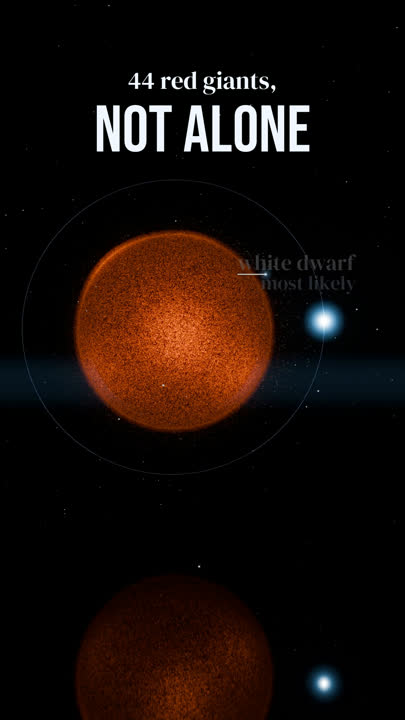
Some of the stars we can see with our own eyes are red giants, stars in a later part of their lives. Arcturus, in the northern constellation of Bootes, is one. Gamma Crucis, in the Southern Cross, is another. Red giants usually look more orange than red.
Imagine looking up on a calm night and finding one warm, orange star, glowing softly among the white ones, like a lantern with an amber glass, shining gently over the fields and the sleeping houses.
Old, warm and orange. Some of the stars we see each night are already in the gentle evening of their long lives. Their light is warm and soft and steady, like a lamp left on in a window for someone coming home.
Our Sun is about four point six billion years old. Scientists expect it to stay a steady, main sequence star for another five billion years or so. Only after that, in the far distant future, will it slowly swell and become a red giant.
Picture the Sun rising and setting, again and again, over the hills and the sea, for billions of years more, far longer than the oldest mountains, warm and steady and patient, through every season you could ever imagine.
Billions of years of steady sunlight still ahead. There is no need to think about the far future at all. The Sun will be there, warm and bright, for every morning to come. Let that thought rest with you now, of long, quiet years of gentle sunlight, stretching far ahead.
In nineteen twelve, the American astronomer Henrietta Swan Leavitt studied stars called Cepheid variables, whose brightness rises and falls in a steady rhythm. She found that the length of a star's rhythm reveals how bright it truly is. This let astronomers measure distances to faraway stars and galaxies.
Imagine a star slowly brightening and fading, brightening and fading, like a soft lighthouse far out at sea, or like the slow, even breathing of someone fast asleep in the next room.
A star that breathes in light. Henrietta Leavitt listened to that gentle rhythm, and it helped people measure the size of the universe. Let your own breath slow down to match that soft rhythm, bright and fading, in and out, slow and calm.
## Universe facts 51 to 75
Let us follow the stars now, slowly, into the long, soft evening of their lives.
When a star of less than about eight times the Sun's mass runs out of hydrogen in its core, the core draws inward and grows hotter. It becomes so hot that helium begins to join together into carbon. Meanwhile, the star's outer layers slowly swell outward, and the star becomes a red giant.
Imagine a star slowly growing larger and softer, like a loaf of bread rising in a warm kitchen, its colour changing from yellow-white to a warm, gentle orange, as it settles into the long evening of its life.
A red giant is a star in its evening hours. It is large and warm and glowing, still shining, still giving out its light, simply in a softer, older way than before. There is no hurry in any of it. Everything happens over many millions of years. So let us drift now, slowly and softly, into the long evening hours of the stars.
In time, a red giant becomes unsettled and begins to pulse, gently swelling and releasing parts of its outer layers. Eventually, all of its outer layers drift away into space, forming a glowing, expanding cloud of gas and dust. Astronomers call this cloud a planetary nebula, even though it has nothing to do with planets.
Picture a soft, round cloud of coloured light, slowly spreading out in every direction, like a drop of ink opening gently in a glass of still water, blooming wider and fainter as the years go by.
A planetary nebula is one of the most beautiful sights in the sky. The star gives its outer layers back to space, slowly and softly, and they glow for a while in every colour. Let those soft colours spread out gently in your mind, wider and fainter, until they are almost gone.
The Ring Nebula is the glowing remains of a sunlike star. It lies about two thousand light-years away, in the constellation of Lyra, the lyre. It was discovered in seventeen seventy-nine by the French astronomer Antoine Darquier, and with a moderately sized telescope, its delicate ring can be seen.
Imagine looking through a telescope on a quiet night and finding a small, pale ring of light, floating in the dark like a smoke ring drifting slowly upward from a candle that has just been blown out.
A soft ring of light in the constellation of the lyre. Some of the loveliest things in the sky are the gentle traces left behind by stars, long after their busiest days are over. Let that pale ring of light float softly in your mind for a moment, and then let it slowly drift away.
Hubble's picture of the Ring Nebula shows its colours. The deep blue in the centre is helium. The light blue of the inner ring is the glow of hydrogen and oxygen. The reddish outer ring comes from nitrogen and sulfur. Along the inner edge are dark knots of gas that look like the spokes of a bicycle wheel.
Picture a great round window of stained glass, deep blue in the middle, then pale blue, then a soft red at the edge, with fine dark lines running inward, all glowing quietly in the darkness of space.
Each colour is a different element, shining in its own way. The Ring Nebula is like a gentle painting made of the very stuff of stars. Let the deep blue and the soft red glow quietly for a while, and then let them slowly dim.
After a red giant has let go of all its outer layers, only the core remains. This is called a white dwarf. It is usually about the size of the Earth, but hundreds of thousands of times more massive. A single teaspoon of its material would weigh more than a pickup truck.
Imagine a tiny, glowing coal left in a fireplace after the fire has gone quiet, small and bright, holding its warmth for a very long time, slowly fading from white, to yellow, to a soft red.
A white dwarf makes no new heat of its own. It simply cools, very slowly, over billions of years, like an ember resting quietly in the ashes long into the night. Let your own thoughts cool and soften too, slowly, gently, like the last warm glow of an evening fire.
Models of our galaxy suggest that the Milky Way holds about ten billion white dwarfs. And more than ninety-seven percent of the stars in the Milky Way, including our own Sun, are expected to become white dwarfs one day, far in the distant future.
Picture the galaxy as a vast, dark field after a long festival, with billions of small embers still glowing softly here and there, each one a quiet reminder of a star that once shone brightly.
Ten billion small embers, glowing all across the galaxy. It is a gentle thought, that so many stars end their long lives so softly and so quietly. Let those embers glow softly all around you for a while, warm and quiet and very far away.
The nearest known white dwarf is called Sirius B. It is a faint companion to Sirius, the brightest star in our night sky, about eight point six light-years away. It was first seen through a telescope in eighteen sixty-two by Alvan Graham Clark.
Imagine the bright star Sirius, shining white and clear, and right beside it, almost lost in its glow, a tiny, faint point of light, quietly keeping it company as they travel together through the dark.
A small, faint companion beside the brightest star. Even the most dazzling lights in the sky can have a quiet friend, travelling gently beside them. Let that small, quiet light rest beside the bright one, keeping it gentle company through the long night.
A star much heavier than the Sun goes further. In its core, carbon is joined into heavier elements like oxygen, neon and magnesium. For the largest stars, this chain goes on until silicon is joined into iron. Each new fuel lasts a shorter time than the one before it.
Picture the layers of an onion, one inside another, each layer made of a different element, from light hydrogen at the outside, down through carbon and oxygen and silicon, to a small heart of iron in the very centre.
Layer within layer, element within element. The largest stars are like great furnaces, slowly building the heavier ingredients of the universe, one after another. Let the layers slowly settle in your mind, one inside the other, quiet and still, like rings in an old tree.
When a very large star's core can no longer make energy, the core falls inward and then rebounds. This sends a great wave out through the star, and the star flares into a huge, brilliant outburst called a supernova. The core remains behind as a very dense object, either a neutron star or a black hole.
Imagine a star that, for a little while, shines far more brightly than ever before, its light spreading out across the vast distance of space, and then slowly fading away again into the dark.
A supernova is the grand finale of a great star's life. And what remains, small and dense and quiet, keeps on turning in the dark for a very long time. Let that bright glow fade gently now, into the soft, deep quiet of the night sky.
The material thrown out into space by a supernova, and by other stars at the end of their lives, does not disappear. It enriches the great clouds of gas and dust, and it becomes part of the next generation of stars.
Picture a soft cloud of stardust, drifting slowly between the stars, carrying iron, and carbon, and oxygen, until one day it gathers together again, slowly and softly, into a new star.
Nothing is wasted. What one star gives back to space, another star gathers up again, in a long and gentle circle that goes on and on. Let yourself drift with that soft cloud for a little while, slowly, through the long, quiet dark.
In the year ten fifty-four, Chinese astronomers noticed a guest star, a new light in the sky that was so bright it could be seen during the day for nearly a month. It was a supernova. The cloud it left behind is the Crab Nebula, about six light-years wide.
Imagine people a thousand years ago, looking up into the blue daytime sky and seeing a star shining there, where no star had been before, bright and steady, a quiet and wondrous visitor.
A guest star, visiting for a while and then fading away. And the soft cloud it left behind is still glowing in the sky, almost a thousand years later. Let that gentle visitor shine for a moment in your mind, and then let it fade softly, just as it did.
The Crab Nebula was discovered in seventeen thirty-one by the English astronomer John Bevis. Later, the French astronomer Charles Messier saw it and mistook it for Halley's comet. That mistake inspired him to make his famous catalogue of objects in the sky that might be mistaken for comets.
Picture an astronomer long ago, sitting at his telescope through the cold night, carefully writing down each faint, misty patch of light he found, so that no one would mistake them again.
One small mistake led to one of the most loved lists in astronomy. The Crab Nebula became the very first entry, number one, in Messier's catalogue. There is a quiet comfort in that. Even a mistake, made gently and honestly, can lead to something lovely.
At the centre of the Crab Nebula is a rapidly spinning neutron star, the very dense core of the star that flared long ago. Like a lighthouse, it sends out two beams of radiation, which make it seem to pulse thirty times every second as it turns.
Imagine a tiny lighthouse, far out in the dark sea of space, its beam sweeping round and round, flashing gently past us thirty times every second, never resting, never stopping, for hundreds of years.
A lighthouse at the heart of a soft cloud. The Crab's small spinning star still turns and turns, lighting up the glowing gas all around it. Let that gentle beam sweep past you softly, again and again, steady and calm, like waves on a distant shore.
A neutron star forms when a star of between about eight and twenty times the Sun's mass reaches the end of its fuel. A neutron star packs more mass than the Sun into a sphere about as wide as Manhattan Island in New York is long.
Picture a whole star, heavier than our Sun, squeezed down into a small, bright ball no wider than a city, glowing softly and spinning quietly, all alone in the dark.
A star the size of a city. It is one of the strangest and most wonderful things in the universe, and there are many of them, turning quietly out among the stars. Let the thought of that small, spinning star drift slowly away now, quiet and far and calm.
Neutron stars are incredibly dense. A single teaspoon of neutron star material would have a mass of more than five trillion kilograms, about nine hundred times the mass of the Great Pyramid of Giza. If the whole Earth were packed this tightly, it would fit into a ball about three hundred metres across.
Imagine the whole of the Earth, with its oceans and mountains and forests, gently folded down and down, until it is only about as wide as a few city blocks.
A teaspoon as heavy as nine hundred pyramids. There is no need to understand it. Simply let it be one of the quiet wonders of the night. Let your own body feel heavy and soft and comfortable, sinking gently into the bed, with nothing to hold up.
Pulsars are a type of rapidly spinning neutron star. Bright spots form on their surfaces, and as they turn, the spots sweep in and out of view like the beams of a lighthouse. Some pulsars spin faster than the blades of a kitchen blender. Astronomers usually observe them by their X-rays and radio waves.
Picture many tiny lighthouses, scattered all across the galaxy, each one spinning at its own steady speed, sending soft pulses of light and radio waves out across the dark, like a great, quiet orchestra keeping time.
Spinning lighthouses, all through the Milky Way. Each one keeps its own steady beat, ticking gently, like a clock in a quiet house at night. Let the soft, steady ticking of those faraway lights help you settle deeper into the quiet of the night.
In nineteen sixty-seven, Jocelyn Bell Burnell and Antony Hewish discovered regular pulses of radio waves coming from somewhere in space. The source turned out to be a rotating neutron star, the first known radio pulsar. Most of the neutron stars known since then have been found as pulsars.
Imagine a young astronomer, carefully studying long records of radio signals from the sky, and noticing, among them, a small, regular pattern, beating evenly, like a soft heartbeat coming from the stars.
A steady pulse, coming from the depths of space. One careful, patient look opened up a whole new family of stars. Let that faraway heartbeat remind you of your own, slow and steady, beating calmly as you rest.
All neutron stars have strong magnetic fields. But one kind, called a magnetar, has a magnetic field that can be ten trillion times stronger than a refrigerator magnet, and up to a thousand times stronger than an ordinary neutron star's.
Picture a small magnet holding a note to a fridge door in a quiet kitchen at night. Now imagine a pull ten trillion times stronger, far out in space, circling around a tiny, spinning star.
The strongest magnets in the universe, very far away. And here, in your quiet room, only the gentle pull of sleep. Let yourself be drawn softly down into rest, slowly, gently, with no effort at all.
In fifteen seventy-two, a supernova appeared in the sky and was carefully studied by the Danish astronomer Tycho Brahe. The glowing remains of that star lie about thirteen thousand light-years away, in the constellation Cassiopeia, and they can be seen today in X-ray light.
Imagine an astronomer more than four hundred years ago, wrapped in a heavy cloak, standing in the cold night air, measuring the position of a bright new star again and again, and writing it down by candlelight.
A star watched over carefully, centuries ago. Its soft glowing remains are still out there, slowly spreading, still being studied. Let that candlelight glow softly in your mind for a moment, and then let it slowly dim and go out.
Black holes are not really holes at all. They are huge amounts of matter packed into very tiny spaces. Their gravity is so strong that nothing, not even light, can escape from inside a boundary called the event horizon. That boundary is not a surface, but it marks the edge of the black hole.
Picture a perfectly dark circle, quiet and still, with the light of distant stars bending softly around its edges, like ripples curving around a smooth stone resting in a stream.
Not a hole, but a great deal of matter in a very small space. Black holes are among the most mysterious things in the universe, and there is still much to learn about them. Let that quiet dark circle rest in your mind, smooth and calm and still, like a pebble at the bottom of a clear pool.
Black holes give out no light of their own, so telescopes cannot see them directly. Scientists find them by their effects on the things around them. Some are surrounded by glowing disks of gas and dust. And their gravity can bend the light from more distant objects behind them.
Imagine a dark, still lake at night. You cannot see the water itself, but you can see the moonlight dancing on its surface, and the way the reflections of the trees bend softly at its edge.
We know black holes by the light around them. Sometimes the most hidden things are found by the gentle way they change everything nearby. Let the moonlight shimmer gently on that dark water for a while, and then let it slowly fade.
Black holes do not suck in everything around them. From far enough away, their gravity works just like that of any other object with the same mass. If the Sun were replaced by a black hole of the same mass, the solar system would grow much colder, but the planets would keep circling in their orbits.
Picture all the planets going calmly round and round, just as they always have, following their same old paths, steady and unhurried, as if nothing at all had changed.
From far away, a black hole is just another quiet pull of gravity. The planets would keep their courses, turning gently in the dark, as they always do. Let that steady, peaceful turning carry you along with it, round and round, softly into sleep.
Most galaxies the size of the Milky Way have a very large black hole at their centre. Ours is called Sagittarius A star, and it has about four million times the mass of the Sun. Astronomers proved it is there by tracking stars orbiting it, a discovery that won the Nobel Prize in twenty twenty.
Imagine the very centre of the galaxy, far away behind clouds of dust, and a cluster of bright stars circling gently around a dark, quiet middle, like moths turning slowly around an unlit lamp.
A dark, quiet centre, holding many stars in their circles. Our whole galaxy turns slowly around it, and we turn with it, very far away. Let yourself turn gently with it, slowly and calmly, carried along without any effort at all.
All black holes spin. The fastest known turns more than one thousand times every second. The nearest known black hole is about one thousand five hundred light-years away, very far from the Earth, resting quietly among the stars.
Picture a dark point in space, spinning steadily, with a faint glow of gas swirling around it, like water circling slowly around a drain in a quiet stream, round and round and round.
Turning and turning, far away in the dark. Even black holes have their own steady rhythm, spinning quietly while the universe goes on around them. Let your thoughts circle slowly too, round and round, softer and softer, until they come to rest.
Most large galaxies have very large black holes at their centres, and some have billions of times the mass of the Sun. The most massive black hole yet observed, known as Ton six one eight, has about sixty-six billion times the mass of our Sun.
Imagine sixty-six billion Suns, all gathered into one dark and quiet place, far, far away, so distant that it is hard to imagine, resting quietly in the deep dark of the universe.
Sixty-six billion Suns. Let the number pass by like a distant cloud. It is very far away, and very still, and you can leave it there, resting quietly in the deep dark. And now, let us drift outward, beyond the stars, to the galaxies, and to the gentle beginnings of everything.
## A slow breath
Let's pause here, and breathe for a moment.
## Universe facts 76 to 100
From the Earth, our galaxy looks like a faint, milky band of light, arching across the whole night sky. That is how it got its name. The ancient Greeks called it the milky circle, and their word for milk is the root of our word galaxy, the name we now give to every great family of stars.
Imagine lying on soft grass on a warm night, far from any town, and seeing a pale, glowing river of light flowing across the sky from one horizon to the other, as if someone had gently spilled a little milk across the dark.
The Milky Way, and the word galaxy too, both come from that soft, milky glow. When you see it, you are looking edge-on into the disk of our own home galaxy, from somewhere inside it. Let that soft river of light flow gently over you for a while, quiet and pale and very old.
In Australia, the Gomeroi people, between New South Wales and Queensland, have called the Milky Way the giant Emu in the Sky, stretching across the night. And the Kaurna people of the Adelaide Plains, in South Australia, called the Milky Way by a name that means house river.
Imagine the dark shapes between the stars of the Milky Way slowly forming the long neck and body of an emu, striding gently across the sky, as it has for countless generations of people watching from below.
An emu in the sky, and a river like a home. These old names remind us that people have been looking up, wondering and telling stories, for a very long time. Let the great emu stride slowly across your mind, and then let it fade into the soft glow of the stars.
Our home galaxy is a spiral galaxy, with a disk of stars more than one hundred thousand light-years across. The Earth and the Sun are about halfway out from the centre, in a smaller arm of the spiral called the Orion Spur, which branches out from a larger arm.
Imagine a great, slowly turning pinwheel of light, with long, curving arms of stars sweeping out from a bright centre, and somewhere along one of those soft arms, a small yellow star with a little blue planet beside it.
Somewhere along a quiet arm of a great spiral, about halfway out, there is a small blue world, and on it, a quiet room, and in it, you, resting. Let yourself feel held there, gently, in the slow and quiet turning of the great spiral.
The Sun travels around the centre of the Milky Way, carrying all the planets with it. Our solar system moves at an average speed of about seven hundred and twenty thousand kilometres an hour. Even so, it takes more than two hundred million years to travel once around the galaxy.
Picture the Sun and its little family of planets, sailing slowly along a vast circle around the centre of the galaxy, like a small boat on a very wide, very calm sea, in no hurry at all.
More than two hundred million years for one turn around the galaxy. One slow turn takes longer than anything we could ever count, and still the journey goes on, steady and calm. Let yourself be carried along too, softly, on that long and gentle journey through the night.
The Milky Way is part of a neighbourhood of more than fifty galaxies, called the Local Group. Its members range from small dwarf galaxies, with up to a few billion stars, to the great Andromeda Galaxy, our nearest large neighbour. The Local Group sits just off the edge of a much larger cluster of galaxies, in the constellation Virgo.
Imagine a small village of galaxies, scattered across a quiet valley in the dark, with two large houses at its heart, and many small cottages gathered softly around them.
Our own small neighbourhood among the galaxies. Even out here, in the great deep of space, we have neighbours, and a place we belong. Let that quiet village of galaxies rest softly in your mind, its windows glowing warmly in the dark.
The Andromeda Galaxy is about two and a half million light-years away, and yet it can be seen with the unaided eye, even where the sky is not very dark. Because it is so easy to see, no one knows who first noticed it. The first known written record of it is in the Book of Fixed Stars, by the Persian astronomer al-Sufi, from the year nine sixty-four.
Picture a small, soft, oval smudge of light, resting quietly among the stars, so faint and gentle you might almost miss it, though its light has travelled for two and a half million years to reach your eyes.
The light from Andromeda that reaches us began its journey a very, very long time ago. And still it arrives, softly, every clear night. Let that faint and ancient light settle gently into your thoughts, like a soft lamp seen from very far away.
The Hubble Space Telescope spent more than ten years photographing the Andromeda Galaxy, taking about six hundred overlapping pictures. Stitched together, they make an enormous image of at least two and a half billion pixels, showing about two hundred million stars. Even so, that is only a part of Andromeda's stars.
Imagine a great tapestry, slowly woven over ten years, one small square at a time, until at last it shows two hundred million tiny points of light, each one a sun, glowing softly in blue and gold.
Two hundred million stars in one picture, and still only part of the whole. Andromeda is so vast that even a decade of patient looking cannot show us everything. Let that great tapestry of stars glow softly in your mind, and then let it slowly fade into the dark.
For a long time, many astronomers thought the Milky Way held all the stars in the universe. Then, in nineteen twenty-three, observations by Edwin Hubble showed that the Milky Way is just one of many galaxies. They come in many shapes, mostly spirals and smooth ellipticals, along with less orderly ones called irregular galaxies.
Imagine stepping out of a single room into a great, wide night, and finding that beyond your window there are countless other lit windows, each one a whole galaxy, stretching away into the dark.
One galaxy among a great many. The universe turned out to be far larger than anyone had imagined, and far more full of light. Let all those distant windows glow softly in your mind, each one warm and quiet and very far away.
The Whirlpool Galaxy, about thirty-one million light-years away, is a beautiful spiral with long, curving arms, like a grand spiral staircase in space. A small companion galaxy sits at the tip of one arm. It has been gliding slowly past the Whirlpool for hundreds of millions of years.
Picture a great swirl of light, turning slowly like water spiralling gently in a pool, with pink clouds and blue clusters of young stars along its arms, and a small yellow companion resting at the end of one curve.
Two galaxies, gliding past each other for hundreds of millions of years. In the universe, even a passing visit can take longer than all of human history many times over. Let that slow swirl of light turn gently in your mind, round and round, like water settling in a quiet pool.
Galaxies gather into groups of about one hundred or fewer. Larger gatherings, called clusters, may hold thousands of galaxies. Groups and clusters form even larger superclusters. Together with great empty spaces called voids, and long walls of galaxies, they make up the cosmic web, the great web of matter that runs through the universe.
Picture a vast, delicate spider's web, glistening with dew in the early morning light. Each tiny droplet along the threads is a galaxy, and between the threads are wide, quiet spaces of dark.
A web of galaxies, stretching across the universe. On the very largest scale of all, everything is softly connected, like the threads of a web shining in the dawn. Let that delicate web shimmer softly in your mind, every thread quiet, every droplet glowing gently in the dark.
In nineteen twenty-seven, the Belgian astronomer Georges Lemaitre showed that the universe could be expanding. Then, in nineteen twenty-nine, Edwin Hubble, working with Milton Humason, confirmed that galaxies are moving away from us, and the farther away they are, the faster they are moving. The universe is really expanding.
Imagine a loaf of raisin bread rising slowly in a warm oven. As the dough grows, every raisin moves a little further away from every other raisin, gently and evenly, all at once.
The universe is slowly growing, and the galaxies are drifting gently apart. Everything is spreading out, softly, into more and more space. Let your own thoughts spread out softly too, wider and quieter, with more and more space between them.
Around thirteen point eight billion years ago, the universe expanded faster than the speed of light for a tiny fraction of a second. This is called cosmic inflation. Scientists are not sure what came before it, or what powered it. When it ended, its energy turned into matter and light, and this is what we call the big bang.
Picture the smallest spark of light you can imagine, opening outward in an instant into a great bright space, the very first moment of everything that would ever be.
Thirteen point eight billion years ago, everything began. Every star and every galaxy, and every atom of you, traces its story back to that first quiet moment. Let that first gentle light glow quietly in your mind, and let everything since then unfold slowly, in its own time.
One second after the big bang, the universe was an extremely hot mixture of light and particles, at about ten billion degrees Celsius. In the minutes that followed, the first elements formed, hydrogen and helium, with tiny traces of lithium and beryllium. After about five minutes, most of the helium in the universe today had already formed.
Imagine a great, glowing mist, cooling slowly, minute by minute, and within it, the smallest pieces of matter coming together, gently and quietly, to make the very first elements.
In just a few minutes, the first ingredients of the universe were made. Much of the helium that exists now was formed in those first moments. Let that great glowing mist cool softly in your mind, minute by minute, until everything is calm and still.
For a long time after the big bang, the universe was filled with a kind of fog, because free electrons scattered the light. Then, about three hundred and eighty thousand years after the big bang, the universe cooled enough for atoms to form, and the fog cleared. For the first time, light could travel freely across great distances.
Picture a thick morning fog over a valley, slowly lifting as the air cools, until at last the whole landscape is clear, and you can see for miles and miles in every direction.
The fog lifted, and the universe became transparent. From that moment on, light could travel freely, and some of that light is still travelling to us now. Let your own thoughts grow clear and quiet too, like a valley resting peacefully after the fog has lifted.
The glow released when the cosmic fog cleared is still with us. It is called the cosmic microwave background, and it is the oldest light we can observe. Over billions of years, as space expanded, this light has been stretched and cooled, to about two point seven degrees above absolute zero.
Imagine a faint, cool glow, coming softly from every direction of the sky at once, so gentle that our eyes cannot see it, quietly filling the whole universe like a very old and very soft song.
The oldest light in the universe is all around us, even here, even now. It fills every part of space, including this quiet room. Let that soft, ancient song wash gently over you, quiet and steady and everywhere at once.
The cosmic microwave background was first detected, by accident, in nineteen sixty-four. Arno Penzias and Robert Wilson were using a large radio antenna in New Jersey when they found a faint signal coming from everywhere in the sky. Their discovery earned them the Nobel Prize in Physics in nineteen seventy-eight.
Picture two scientists, puzzled by a faint, steady signal in their great antenna, never guessing at first that they were hearing the very beginning of the universe.
A faint signal, found by chance. Sometimes the greatest discoveries arrive quietly, while we are looking for something else. Let that faint, steady signal fade softly now into the background, like the gentle hum of a quiet night.
The oldest light is almost perfectly even across the whole sky, but not quite. It has tiny differences in temperature, of about one part in one hundred thousand. These small differences show where matter was slightly more or less dense in the early universe, and they were the seeds that grew into the galaxies we see.
Imagine a smooth, still pond, with just the faintest ripples on its surface, so small you would hardly notice them. Over billions of years, those tiny ripples slowly grow into everything there is.
Tiny ripples, too small to notice, grew into galaxies, and stars, and planets. Great things can begin from the very smallest and gentlest of differences. Let those faint ripples spread gently across the still water of your mind, softer and softer, until it is calm.
The first stars were between thirty and three hundred times more massive than our Sun, and millions of times brighter. Over several hundred million years, they gathered into the first galaxies. By the time the universe was one billion years old, starlight had cleared the remaining gas, and the universe became transparent, as we see it now.
Imagine the very first stars, huge and bright, lighting up a dark young universe one by one, like lamps being lit along a long, quiet street at dusk.
The first lights of the universe. Each one helped to clear the way, so that, billions of years later, we could look up and see so far. Let those first lamps glow softly along the street of your thoughts, one by one, warm and quiet.
In nineteen thirty-three, the Swiss-born astronomer Fritz Zwicky noticed that the galaxies in a cluster were moving too fast to be held together by the matter he could see. He suggested an invisible kind of matter, and called it dark matter. In the nineteen seventies, the American astronomer Vera Rubin found strong evidence for it in spiral galaxies.
Imagine a spinning carousel at night, its painted horses turning round and round. You cannot see what holds them in place, but you know something must, because they keep going round and never drift away.
Dark matter is the invisible glue of the universe. No one has seen it directly, but its gentle pull keeps the galaxies together. Let yourself feel held in the same quiet way, gently and invisibly, by everything around you.
Scientists estimate that ordinary matter, everything we can see, from stars and galaxies to the shoes on your feet, makes up only about five percent of the universe. Dark matter makes up about twenty-seven percent. The rest, about sixty-eight percent, is thought to be dark energy.
Picture a great dark sea, with only a few small, glowing islands scattered across it. The islands are all the stars and planets and people. The quiet water all around them is everything else.
Everything we can see is only a small part of the whole. The universe is mostly quiet and unseen, and there is still so much left to wonder about. Let that wide, quiet sea surround you, calm and dark and peaceful, holding everything gently.
In nineteen ninety-eight, two teams of astronomers studying faraway supernovae found that they were dimmer than expected. This meant the universe's expansion is speeding up. Their work won the Nobel Prize in Physics in twenty eleven. Whatever is causing this has been named dark energy, but no one yet knows what it is.
Imagine a balloon being slowly blown up, not slowing down as it grows, but swelling a little more easily all the time, as if some gentle, unseen breath were helping it along.
The universe is growing, and growing a little faster all the time. Its biggest mysteries are still waiting patiently, and there is no hurry to solve them. Let those questions float softly away, far into the quiet dark, where they can rest until another night.
In nineteen ninety-five, the Hubble Space Telescope spent ten days looking at a tiny, dark patch of sky near the handle of the Big Dipper. The patch was about as big as a pinhead held at arm's length. In that small, empty-looking spot, Hubble found roughly three thousand distant galaxies.
Imagine holding a pin at arm's length against the night sky, and then learning that behind its tiny head lie thousands of galaxies, each one filled with billions of stars, glowing softly in the dark.
Three thousand galaxies, hidden behind a pinhead. Even the emptiest-looking parts of the sky are full of light, if we look patiently enough. Let that tiny patch of sky glow gently in your mind, full of soft and distant light.
The James Webb Space Telescope launched on Christmas Day, twenty twenty-one. It does not circle the Earth like Hubble. Instead, it orbits the Sun about one and a half million kilometres away from the Earth. It has a large, gold-coated mirror, and a sunshield with five layers that shields it from the warmth of the Sun, the Earth and the Moon.
Picture a great golden flower, made of many shining mirror petals, floating quietly in the dark, far from the Earth, shaded beneath a wide silver sunshade, patiently gazing out into the deep universe.
A golden mirror, floating far away in the cold and quiet. Every night, while we sleep, it keeps looking deeper into the past. Let that golden mirror shine softly in your mind for a moment, quiet and patient and far away.
Webb's first deep image showed thousands of galaxies around a distant cluster of galaxies. The cluster's gravity, together with its dark matter, acts like a giant lens, magnifying the galaxies far behind it. Some of the most distant galaxies look like loose collections of dandelion seeds drifting in a breeze.
Imagine a summer field, and a soft breeze lifting dandelion seeds into the air, each one drifting gently away into the blue. Now imagine each seed is a galaxy, far across the universe.
Galaxies like dandelion seeds, floating on the breeze of space. It is a lovely thought to fall asleep with. Let them drift slowly away now, one by one, carried softly on the breeze, further and further into the dark.
The part of the universe we can observe is called the observable universe. It is a vast sphere around us, with a radius of about forty-six and a half billion light-years. It is limited by how far light has been able to travel to reach us since the universe began. And every place in the universe has its own observable universe around it.
Picture yourself at the very centre of a great, glowing sphere, filled with galaxies in every direction, reaching out further than anything could ever travel, with you resting quietly in the middle of it all.
From wherever you are, the universe spreads out all around you, softly, in every direction. And right now, in the middle of it all, there is this quiet room, and you, resting. Let all of it, every star and every galaxy, glow softly around you now, as you drift gently toward sleep.
## Remembering today
Now, leave the galaxies turning slowly where they are, and come back, softly, to the day you have just had.
Find one small moment in it that felt good. A warm drink, a kind word, a little patch of sunlight on the floor.
Let that moment glow quietly, like a small star, for a little while.
## Gratitude
And now, think of one thing you are thankful for.
It can be something very small. A soft pillow, a quiet room, someone you love, this slow and easy breath.
Just let it rest beside you, warm and gentle.
## Drifting off
One last time, breathe with me.
That is all for tonight.
Far away, the stars keep shining, the galaxies keep turning, and the oldest light in the universe keeps drifting softly through the dark, while you sleep.
Rest now.
Goodnight.