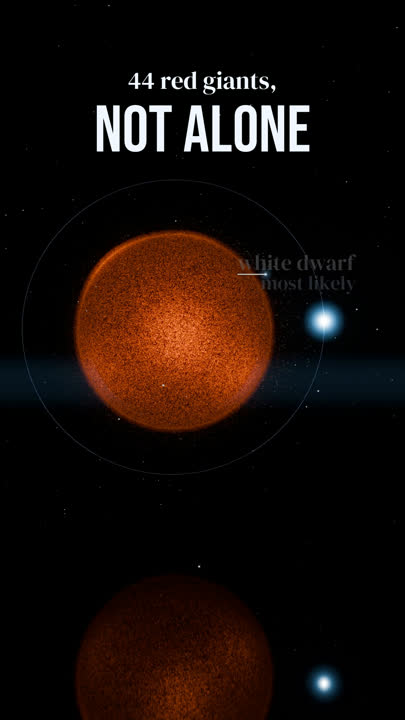
A Mars Rover May Have Driven Over the Shore of a Freezing Ocean
A Mars rover may have driven over the shore of an ancient ocean.
Preprint: not yet peer reviewedBased on the abstract
If the layers under China's Mars rover are a coast, why do its waves look far too weak?
Zhurong's ground-penetrating radar imaged 76 sub-parallel reflectors at 10-35 m depth under southern Utopia Planitia, dipping north at 14.5 degrees and interpreted as coastal foresets.
The layers' dip limits the maximum nearshore orbital velocity to 0.003-0.005 m/s, two and a half to three orders of magnitude below the 1-15 m/s band from climate-model constraints, for a bay open to a 4,100-12,000 km fetch.
The sole author says the mismatch resolves if the ocean was freezing while the layers accumulated: complete freeze within 10,000 years, layers in about 50 years, the low waves the expected sign of sea ice advancing.
The host rock dates to about 750 million years ago, range 0.76-1.8 billion years.
One author's preprint, not yet peer reviewed, read from its abstract only; the coast reading of the layers is an interpretation, and whether Mars ever sustained a long-lived northern ocean remains contested. The snail and the lifetime are our own comparisons; the drawings are illustrations, not to scale.
Short link: thelast24hoursscience.com/s/fdJ4mxVsBSo
A freezing ocean on late-stage Mars, recorded by wave-built foresets at the Zhurong landing site
Read the study DOI: 10.22541/essoar.15011351 · preprintThis is general information, not medical or professional advice.
A Mars rover may have driven over the shore of an ancient ocean.
Its waves look hundreds of times too weak.
China's Zhurong rover spotted tilted layers underground. They may be a coast built by waves, says a study out nine hours ago.
That coast faces open ocean, so climate models expect strong waves. But the tilt says water moved barely faster than a snail.
It all fits if that sea was freezing.
Spreading ice would smother the waves.
Those layers may have formed in about fifty years, less than a lifetime.
It's one early preprint, and a Mars ocean is still debated.
If it's right, that ocean died quietly.
Spotted a mistake? Tell us and we'll fix it. Every video's sources
iPhone app · coming soonToday's discovery, on your Home ScreenFree. Pro is optional.Five Shorts a day, a sleep video every other night and a deep dive each week. Every one names its source.